




How Insulated Access Doors Reduce HVAC Energy Use in Commercial Buildings

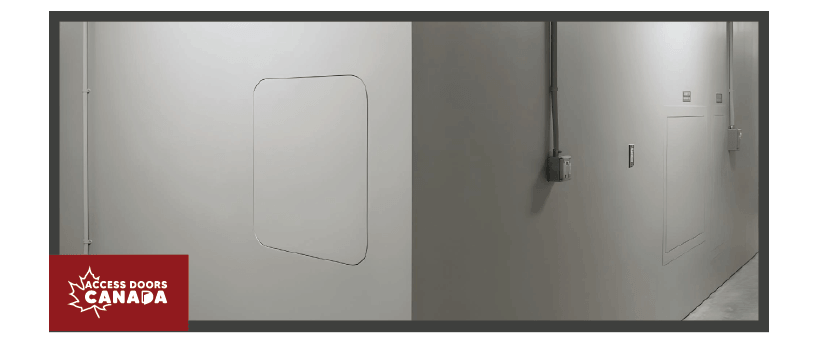
Insulated access doors reduce HVAC energy use in commercial buildings by minimizing air leakage and thermal transfer through wall and ceiling openings. By preserving the integrity of the building envelope, they prevent conditioned air from escaping and outside air from entering mechanical spaces. This helps HVAC systems operate more efficiently and reduce unnecessary heating and cooling cycles.
Products like the ADC-BAC-FRI Fire-Rated Insulated Access Door and the ADC-BAC-DSD Draft Stop Access Panel are designed to improve thermal performance while meeting fire and draft control requirements in commercial buildings.
In this article, we’ll discuss how insulated access doors help reduce HVAC energy use, the features that make them effective, and why choosing the right access door matters for overall building efficiency.
How Do Access Doors Impact HVAC Energy Use in Commercial Buildings?
Access doors impact HVAC energy use by either preserving or undermining air tightness and thermal resistance at mechanical room boundaries.
In commercial buildings, access doors commonly penetrate walls and ceilings separating occupied spaces from mechanical rooms, shafts, and service corridors.
When these doors are uninsulated or poorly sealed, they create persistent energy losses that HVAC systems must offset through increased heating and cooling output. Over time, this raises operational energy costs, reduces system efficiency, and makes it harder to meet HVAC energy efficiency commercial targets.
When it comes to insulated access doors, we deliver high-performance solutions you can rely on. Contact us for standard sizes or custom configurations tailored to your project requirements.
Where Do Thermal Losses Commonly Occur Around Mechanical Access Points?
Thermal losses around mechanical access points typically occur at the access door panel, frame perimeter, and frame-to-assembly interface, where insulation and air barrier continuity are interrupted.
An access door panel with insufficient insulation allows heat to pass more easily than the surrounding wall or ceiling assembly. At the frame perimeter, small gaps or poorly sealed joints can permit air leakage, reducing the effectiveness of the thermal envelope. The frame-to-assembly interface is another critical area, as improper installation or sealing can create thermal bridges that increase heat transfer.
In commercial mechanical rooms, access, equipment vibration, and building movement place additional stress on door components and seals. Over time, gaskets may compress or deteriorate, increasing air leakage and the potential for condensation. In colder climates, these conditions can raise heating demands, contribute to moisture accumulation, and negatively affect HVAC performance, making well-insulated access doors and proper installation essential.
What Insulated Access Door Features Help Reduce Air Leakage and Heat Transfer?
Insulated access doors reduce air leakage and heat transfer through a combination of insulated door cores, continuous perimeter gaskets, rigid frames, and positive latching systems. Each of these features addresses a common point of thermal or air barrier failure at access locations.
Insulated door cores reduce conductive heat loss by limiting heat transfer through the panel. Continuous compression gaskets create a tight seal around the door perimeter, controlling air leakage caused by pressure differences between mechanical spaces and adjacent areas. Rigid frames help maintain proper alignment between the door and frame, preventing gaps from forming over time. Positive latching systems apply consistent pressure to the gasket, ensuring the seal remains effective despite repeated use or vibration.
Related: 5 Reasons Insulated Access Doors and Panels Are Key to Energy Efficiency
How Do ADC-BAC-FRI and ADC-BAC-DSD Support HVAC Energy Efficiency?
The ADC-BAC-FRI Fire-Rated Insulated Access Door and ADC-BAC-DSD Draft Stop Access Panel are designed to minimize energy loss at mechanical access points where insulation and air barriers are often disrupted. By combining insulated construction, controlled closure, and stable framing, both products help limit heat transfer and air leakage that can increase HVAC loads.
ADC-BAC-FRI Fire-Rated Insulated Access Door
In fire-rated mechanical spaces, energy efficiency depends on access doors that remain closed, sealed, and insulated. The ADC-BAC-FRI combines rigid steel construction with a mineral wool-insulated core to limit heat transfer through the door panel.
Its spring-assisted, self-latching mechanism ensures the door closes fully after each use, preventing conditioned air from escaping through unsealed openings. With a 2-hour UL fire rating, the ADC-BAC-FRI access door integrates seamlessly into rated assemblies while preserving thermal and air barrier continuity.
ADC-BAC-DSD Draft Stop Access Panel
The ADC-BAC-DSD access door is designed for locations where controlling airflow is critical to HVAC performance. A flush-to-frame door design minimizes gaps that allow drafts, while a continuous hinge maintains alignment under frequent use.
The self-closing and self-latching mechanism ensures the panel automatically returns to a sealed position, helping maintain consistent air separation between conditioned and unconditioned areas. The exposed flange strengthens the perimeter connection, further reducing air leakage at the surrounding assembly, an important performance feature of energy-efficient access doors in Canada.
Ensure that these high-performance access door solutions are fully utilized in your project by requesting a detailed quote.
When Should Insulated Access Doors Be Specified During HVAC and MEP Coordination?
Insulated access doors should be specified early in HVAC and MEP coordination to be integrated into the building’s thermal and air barrier strategy from the outset. During this phase, mechanical room layouts, shaft locations, and service clearances are established, allowing access doors to be detailed alongside wall and ceiling assemblies.
Early specification ensures that access doors align with insulation levels, air-sealing details, and the energy modelling assumptions used for HVAC load calculations. This coordination helps prevent localized thermal weaknesses that can increase heating and cooling demand, supporting the access doors’ energy performance.
When access doors are selected late in the process, projects often rely on uninsulated or poorly sealed panels due to limited options or schedule constraints. These substitutions can disrupt insulation and air barrier continuity, leading to increased air leakage, heat loss, and higher HVAC energy use.
Frequently Asked Questions on Insulated Access Doors
1. How do insulated access doors integrate with fire-rated and acoustic assemblies?
Insulated access doors can be manufactured to meet fire-resistance and acoustic requirements while still providing thermal insulation. Selection should be based on tested performance to ensure compatibility with the surrounding assembly without compromising code compliance or envelope integrity.
2. What role do insulated access doors play in maintaining air barrier continuity?
Insulated access doors contribute to air barrier continuity by providing sealed access points that limit infiltration and exfiltration. When properly detailed and installed, they prevent access openings from becoming unintended air leakage paths within the building envelope.
3. Are insulated access doors suitable for high-traffic mechanical areas?
Yes, insulated access doors designed for commercial applications are suitable for high-traffic mechanical areas when they feature rigid frames, durable gaskets, and secure latching mechanisms. These features help maintain long-term performance despite frequent access.
To Sum It Up
Insulated access doors reduce HVAC energy use in commercial buildings by preserving thermal envelope continuity and controlling air leakage at mechanical access points. Properly insulated and sealed access doors help limit heat loss and unwanted airflow, allowing HVAC systems to operate as designed and reducing long-term operational energy costs.
At Access Doors Canada, we provide insulated access solutions purpose-built for commercial mechanical applications. Our products support efficient HVAC operation, durable mechanical room detailing, and consistent inspection access without compromising energy performance. Contact our team at +1-888-327-5471 to review your project requirements.


