



How To Choose Access Doors Built for Canada’s Harshest Winters
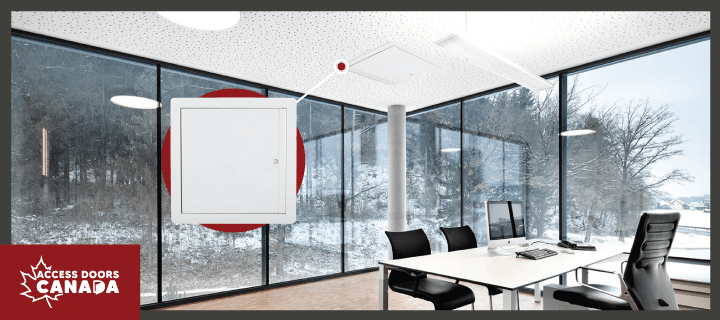
Choosing access doors for Canadian winters means prioritizing insulated, airtight, weather-resistant, and thermally efficient products that can perform reliably in extreme cold. With temperatures often plunging below −40°C and buildings exposed to wind-driven snow, moisture intrusion, and constant freeze–thaw cycles, only cold-climate-rated access doors can maintain the integrity of the building envelope.
One example of a winter-ready solution is the ADC-BAC-FRU Fire-Rated Insulated Panel Upward Opening, designed to deliver superior thermal protection, air sealing, and durability in sub-zero conditions.
In this article, we’ll discuss how to maintain a resilient and energy-efficient building envelope and how the ADC-BAC-FRU can help you achieve reliable performance throughout Canada’s toughest winter conditions.
What Challenges Do Canadian Winters Create for Access Doors?
Canadian winters bring a combination of extreme cold, strong pressure-driven air movement, rapid temperature fluctuations, condensation, and wind-driven snow.
Since access doors intersect with thermal, air, and moisture barriers, understanding how winter conditions affect them is essential for ensuring reliable performance throughout the season.
Extreme Cold and Heat Loss
Sustained low temperatures increase heat transfer across the building envelope. Any component with lower insulation, including an access point, can become a channel for heat to escape more easily. When this happens, indoor temperatures become more difficult to maintain, mechanical systems work harder, and overall energy consumption increases.
Air Leakage and Pressure Differentials
Winter intensifies pressure differences inside and outside the building due to the stack effect and strong winds. These pressure shifts encourage air to move through even small openings.
A well-sealed access door supports the building’s air barrier by preventing cold outdoor air from entering and warm indoor air from escaping. This control is essential in cold climates because unregulated air movement contributes to energy loss, discomfort, and potential moisture migration within enclosed cavities.
Condensation and Moisture Buildup
When warm indoor air meets a surface below the dew point, condensation or frost can form. This is common in winter, especially in assemblies with significant temperature differentials. If moisture accumulates around an access door, it can compromise the integrity of adjacent materials and reduce the overall assembly performance.
Effective insulation and continuous gasketing help minimize temperature variations across the door surface, reducing condensation and supporting long-term material integrity.
Wind-Driven Snow and Freeze–Thaw Cycles
Snow in Canada is often accompanied by strong winds that can push snow into small gaps along any exterior detail. Once snow melts and refreezes within the assembly, it expands, placing added demands on surrounding materials.
Repeated freeze–thaw cycles can gradually wear down components if moisture is allowed to enter and remain within the assembly. Weather-resistant access doors help limit this infiltration, reducing the likelihood of freeze-related expansion or material changes over time.
Which Performance Features Matter Most for Cold-Climate Access Doors?
Most cold-climate access panels in Canada incorporate specific performance features that support thermal efficiency, airtightness, material durability, moisture control, reliable operation, and code compliance.
The following elements are the most important for ensuring dependable performance in harsh winter environments.
High R-Value Insulation
Insulation must align with the surrounding assembly to minimize heat transfer and prevent thermal bridging. Materials such as mineral wool, fibreglass, or rigid insulation help maintain stable interior temperatures and support energy efficiency during extended periods of sub-zero weather.
Corrosion-Resistance
As said, winter introduces moisture, humidity, and freeze–thaw conditions that can affect exterior components. Aluminum or cold-rolled steel treated with protective coatings provides resistance to corrosion, supporting long-term structural stability and consistent performance.
Thermal Breaks
Temperature differences between indoor and outdoor environments often lead to condensation on cold surfaces. Thermal breaks help keep interior surfaces warmer, reducing the potential for moisture or frost formation and protecting adjacent materials from deterioration.
Want to purchase insulated access doors in Canada with these performance features? Request a quote today. We also offer custom access solutions tailored to your project’s efficiency requirements.
How Do Insulated and Airtight Access Doors Improve Winter Energy Efficiency?
Insulated and airtight access doors improve winter energy efficiency by limiting managing airflow, supporting code-required envelope performance, and allowing systems to operate under steadier conditions.
Maintaining Pressure Balance
A well-sealed access door contributes to stable interior pressure relationships, particularly in areas affected by the stack effect. Stable pressure improves airflow control, allowing ventilation and heating systems to operate more efficiently.
Supporting Envelope Integration
When heat transfer and unintended airflow are controlled at access points, adjacent insulation, air barriers, and vapour barriers can function without interruption. This strengthens overall envelope continuity and supports predictable thermal and moisture behaviour during cold conditions.
Enhancing Equipment Efficiency
Limiting heat loss and infiltration reduces the intensity and frequency of heating cycles. More stable system operation lowers energy consumption and extends the service life of mechanical equipment throughout prolonged winter use.
Related post: Why Insulated Access Panels Are Essential for Canada’s Cold Climate?
What Models Are Best Suited for Canada’s Harshest Winter Regions?
The models best suited for Canada’s harshest winter regions are those that combine substantial insulation, dependable airtight gasketing, durable construction, and reliable hardware that performs in sub-zero temperatures.
Options such as the ADC-BAC-FRU Fire-Rated Insulated Panel Upward Opening and the ADC-BAC-ALI Aluminum Insulated Access Panel provide the level of thermal protection and sealing performance needed for buildings operating in severe winter conditions.
Below are the details of the models and how they support reliable performance in extreme cold.
ADC-BAC-FRU Fire-Rated Insulated Panel Upward Opening
The ADC-BAC-FRU is designed for cold-weather performance, featuring a mineral wool–insulated core, cold-rolled steel frame, and an upward-opening configuration that suits tight ceiling spaces. Its NFPA 80-approved self-latching hardware and 2-hour fire rating make it a strong fit for rated ceilings that require energy efficiency and code compliance.
- By stabilizing temperatures at the access point, the panel helps reduce cold-edge condensation and supports a more comfortable indoor environment.
- Its air-barrier continuity is reinforced at ceiling transitions, limiting the movement of conditioned air during periods of high winter pressure.
- The hardware components continue operating reliably in low temperatures, maintaining consistent closure even when metal contraction affects typical latch mechanisms.
- By meeting LEED v4 criteria, the product contributes to projects that prioritize sustainability and efficiency-focused building practices.
ADC-BAC-ALI Aluminum Insulated Access Panel
The ADC-BAC-ALI Aluminum Insulated Access Panel delivers reliable protection in environments exposed to winter conditions. A corrosion-resistant aluminum frame, insulated core, and continuous neoprene gasket work together to maintain energy efficiency while safeguarding interior systems.
- Featuring a 1" fibreglass insulation layer, the panel reduces heat loss and helps maintain stable indoor temperatures.
- Constructed with a corrosion-resistant aluminum frame, the assembly withstands harsh winter environments and repeated freeze–thaw cycles.
- Safety and reliability are enhanced by a key-operated cam latch, which ensures a tight and secure closure.
- The panel’s lightweight design enables straightforward installation while providing long-term durability.
How Does Access Doors Canada Support Cold-Weather Construction and Compliance?
Access Doors Canada supports cold-weather construction and compliance by offering insulated, sealed, and code-compliant access solutions specifically designed for harsh Canadian climates.
They help reduce heat loss through high-performance insulated cores, which play a key role in meeting thermal requirements and supporting interior temperature stability.
Frequently Asked Questions on Insulated Access Panels
1. What is an insulated panel?
An insulated panel is an access door or building component built with a thermal core, such as mineral wool, fibreglass, or rigid insulation, to reduce heat transfer between conditioned and unconditioned areas.
2. Can I install insulated panels myself?
Yes, insulated panels can be installed by the user. However, fire-rated models benefit greatly from professional installation. A qualified installer helps preserve the panel’s rated performance, ensures a proper airtight seal, and verifies correct placement within the assembly. Poor installation can compromise safety, reduce energy efficiency, and lead to non-compliance with ratings.
Additional installation guidance is available on our installation tips page.
3. Which type of insulated panel is best?
The ideal insulated panel depends on the specific needs of the project. Fire-rated panels with mineral wool cores are well-suited for rated ceilings or areas requiring both fire protection and thermal performance.
For general cold-weather environments, insulated aluminum or steel panels with continuous gasketing and secure locking hardware offer strong durability and reliable thermal resistance.
To Sum It Up
Choosing reliable access doors for Canada’s harshest winters is essential for protecting the building envelope, improving energy efficiency, and ensuring long-term performance in extreme cold.
At Access Doors Canada, we provide winter-ready solutions designed to meet the demands of cold-climate construction. Our team is committed to helping you choose the right access door for your project, whether you’re upgrading thermal performance, meeting fire-rating requirements, or enhancing overall building durability.
Call us at +1-888-327-5471 for expert guidance or product recommendations.


