



How To Choose Access Panels That Cut Heat Loss and Boost Energy Efficiency

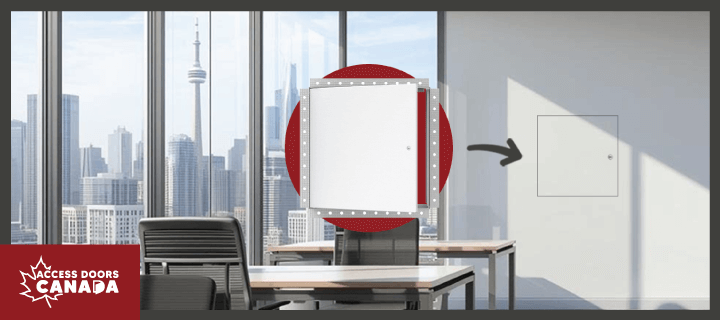
Choosing access panels that cut heat loss starts with selecting insulated, airtight models that maintain building envelope continuity and prevent uncontrolled air leakage. As commercial buildings push toward higher efficiency and adopt stricter energy standards, access doors are now expected to contribute to the overall thermal integrity and air barrier performance.
In many modern projects, the ADC-BAC-FRU Fire-Rated Insulated Panel Upward Opening exemplifies this shift. It shows how a well-engineered access door can help preserve R-value, reduce infiltration at service penetrations, and support NECB and OBC energy compliance through continuous insulation and reliable gasketing.
In this article, we’ll explore how to choose energy-efficient access panels in Canada and why models like the ADC-BAC-FRU offer one of the most effective ways to reduce heat loss in demanding commercial applications.
Why Do Access Panels Matter for Energy Efficiency?
Access panels matter for a building’s energy performance because they create penetrations in walls, ceilings, or mechanical assemblies, which can become weak points for air leakage and thermal bridging.
Even small gaps around non-airtight doors can allow warm indoor air to escape, increase heating loads, and introduce moisture into cold cavities. In cold-climate commercial buildings, this results in increased energy consumption and operating costs.
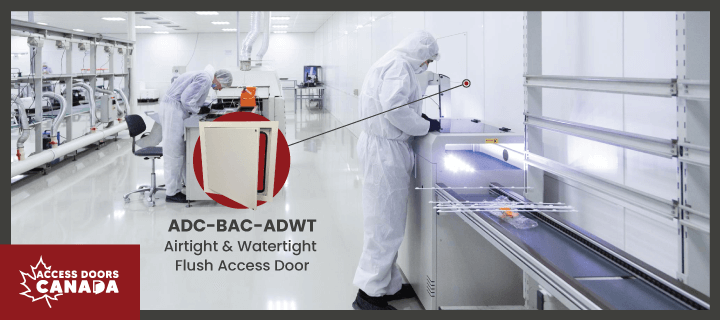
Properly insulated and airtight panels help maintain continuous thermal and pressure boundaries, improving building envelope integrity and supporting compliance with blower-door and energy code testing.
Need access panels that maximize energy efficiency? Request a quote today, and our team of experts will guide you through selecting the right solution for your building. We will provide detailed product information, help you compare options, and ensure that the panels you choose deliver superior insulation, airtight performance, and long-term durability.
What Canadian Energy Codes Apply to Access Doors in Commercial Buildings?
Canadian energy codes, including the National Energy Code of Canada for Buildings (NECB) and the Ontario Building Code (OBC), require access doors that reduce heat loss to comply with standards for airtightness and thermal performance.
National Energy Code of Canada for Buildings
This code sets national standards for insulation, airtightness, and thermal bridging. Access doors must maintain continuous barriers to meet minimum energy performance requirements.
Ontario Building Code
The OBC requires continuous air barriers, low infiltration rates, and proper thermal performance in commercial buildings.
Provincial or Municipal Supplementary Standards
Some regions mandate blower-door testing, Step Code compliance, or LEED-aligned airtightness, making high-performance access panels essential.
What Features Help Access Panels Reduce Heat Loss?
Access panels feature design elements that help reduce heat loss, including airtight seals and secure construction, which preserve the building’s thermal and air barrier continuity.
Other features include:
- High-Performance Insulation: Panels use strong R-values with materials such as polyurethane, mineral wool, or high-density foam to minimize heat conduction.
- Continuous Gaskets: Compression-type gaskets are installed to prevent air infiltration and exfiltration.
- Thermal Breaks: Multi-layer designs and insulated edges reduce conductive heat loss through metal components.
- Secure Latching Systems: Compression latches provide uniform sealing to maintain airtightness.
- Weather-Resistant Construction: Panels are designed to withstand moisture, freeze–thaw cycles, and wind-driven air penetration.
Looking for features not found in standard access panels? Contact us for custom access solutions that meet your size, insulation, fire rating, and operational requirements.
How Can Airtight and Insulated Panels Improve Building Envelope Performance?
Airtight and insulated panels improve building envelope performance by maintaining thermal resistance, controlling air leakage, and reducing condensation. The following points explain how these panels help strengthen the building envelope:
R-Value Integrity
Insulated panels preserve R-value integrity by preventing localized cold spots, keeping interior surfaces closer to desired temperatures.
Air Leakage Control
Gasketed, airtight doors control air leakage, stop drafts, reduce heating loads, and support blower-door test compliance.
Moisture and Condensation Reduction
By preventing warm air from contacting cold surfaces, these panels lower the risk of condensation, protecting structural elements and interior finishes.
Enhanced Durability
Insulated panels in commercial buildings help assemblies perform as designed by maintaining consistent thermal resistance and airtightness, promoting durable construction that lowers long-term maintenance and energy costs.
Related post: What Are the Best Access Doors and Panels for Energy-Efficient Buildings in Canada?
Which Models Best Reduce Heat Loss and Improve Efficiency?
Access Doors Canada offers models specifically designed to maximize insulation, airtightness, and overall envelope performance, including the ADC-BAC-FRU Fire-Rated Insulated Panel Upward Opening and the ADC-BAC-FRI-DF Fire-Rated Insulated Access Door With Mud-In Flange.
ADC-BAC-FRU Fire-Rated Insulated Panel Upward Opening
- Upward Opening Design: The ADC-BAC-FRU Fire-Rated Insulated Panel Upward Opening is ideal for spaces where downward-opening doors are impractical. This design ensures compliance with accessible route requirements while saving valuable space.
- Fire-Rated Performance: It provides up to 2 hours of fire efficiency on rated ceilings, ensuring compliance with building standards.
- Thermal Insulation: With 2-inch thick mineral wool insulation, this panel enhances both fire rating and thermal performance, helping to reduce heat loss.
- Durable Construction: Constructed from cold-rolled steel, the panel resists rust, corrosion, and wear, ensuring long-lasting durability even in high-traffic areas.
- Self-Latching Mechanism: A self-latching mechanism enables hands-free operation in accordance with NFPA 80 standards, making this model one of the best airtight access panels in Canada
ADC-BAC-FRI-DF Fire-Rated Insulated Access Door With Mud-In Flange
- Fire-Rated Wall Performance: Designed for fire-rated walls, the ADC-BAC-FRI-DF Fire-Rated Insulated Access Door With Mud-In Flange provides up to 2 hours of fire efficiency for vertical wall assemblies.
- Drywall Integration: Exposed, perforated flanges allow for taping and mudding, resulting in a seamless finish with only the panel door visible. This feature simplifies drywall installation and delivers a polished appearance.
- Self-Latching Convenience: The spring-loaded self-latching mechanism supports hands-free operation, maintaining airtightness and making daily use more convenient.
- LEED and Energy Efficiency Support: By combining airtightness with insulation, this panel helps support LEED certification credits and promotes energy-efficient building practices.
Frequently Asked Questions on Insulated Access Panels
1. How are insulated access panels installed?
Insulated access panels are installed by securely fastening the frame to the wall, ceiling, or mechanical assembly. Proper alignment of gaskets and insulation is crucial for maintaining airtightness and optimal thermal performance. For fire-rated panels, it is recommended to follow manufacturer guidelines or consult a qualified professional.
For further guidance, you can refer to this video playlist, which provides detailed instructions, step-by-step installation tips, and practical examples for properly installing insulated access panels in various applications.
2. How long do insulated access panels last?
When installed correctly and maintained routinely, insulated access panels can provide reliable performance for decades. High-quality materials such as cold-rolled steel and mineral wool insulation ensure long-term durability, even in demanding or high-traffic environments.
3. How much do insulated access panels typically cost?
The cost of insulated access panels varies according to size, fire rating, insulation type, and any custom features. Standard commercial panels typically range from CAD $200 to $700, while larger or specialized models can exceed CAD $2,600, depending on project requirements.
To Sum It Up
Selecting access panels that minimize heat loss and enhance energy efficiency is crucial for any building aiming to maintain thermal integrity, reduce energy costs, and comply with current energy codes.
At Access Doors Canada, we provide high-performance access solutions that combine superior thermal efficiency with durable construction. Our insulated access panels are designed to integrate seamlessly into commercial buildings, while supporting LEED certification and other energy-efficient standards.
Call us today at +1-888-327-5471 to discuss your requirements and find the access panel solution that best meets your goals.


