



How To Choose the Right Access Panel for Schools, Hospitals, and Government Facilities
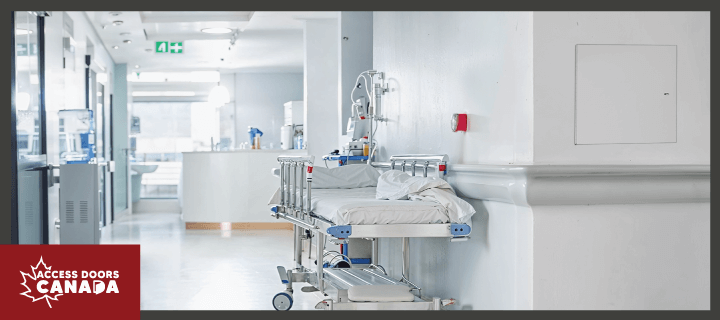
Choosing the right access panel for schools, hospitals, and government facilities means selecting one that meets strict requirements for security, durability, and long-term performance in high-traffic institutional environments.
These buildings must adhere to rigorous standards, requiring access solutions that can withstand frequent use, comply with Canadian codes, and prevent unauthorized entry into critical mechanical, electrical, and life-safety areas.
In Canada, selecting a compliant product, including the ADC-BAC-FRI-DF Insulated Access Door with Mud-In Flange, helps ensure proper security, hygiene, and acoustic performance.
In this article, we’ll discuss the essential requirements, relevant Canadian codes, and key features that make certain access panels ideal for demanding institutional environments.
What Access Panel Requirements Do Schools, Hospitals, and Government Buildings Share?
While each institution has distinct operational priorities, they share several core requirements that shape access panel selection.
1. Building Codes
Institutional facilities are required to comply with rigorous building codes. One such requirement is the use of fire-rated access doors for public buildings in any fire-rated wall or ceiling penetration to uphold the integrity of the assembly.
These panels are often insulated, smoke-sealed, and tested to standards referenced in the National Building Code (NBC) and National Fire Protection Association (NFPA) guidelines.
2. Security and Tamper Resistance
Schools, medical centers, and government buildings house essential infrastructure, such as mechanical, electrical, data, and fire-suppression systems, that must remain protected from tampering. Tamper-proof or vandal-resistant access panels are essential in hallways, public lobbies, and any area accessible to the general public. Units must resist forced entry and prevent unauthorized entry and manipulation of building systems.
3. Durability
Public institutions endure constant movement of students, staff, patients, and visitors. This requires institutional durability, meaning access panels must withstand dents, scratches, corrosion, and repeated use. Materials such as steel, reinforced steel, or heavy-gauge aluminum ensure longevity, especially in high-traffic environments.
4. Cleanability and Hygiene
Hospitals and long-term care facilities require access panels with smooth, easily sanitized finishes. Flush surfaces, antimicrobial coatings, and silicone-free gasketing may be necessary depending on infection-control policies.
5. Interior Design
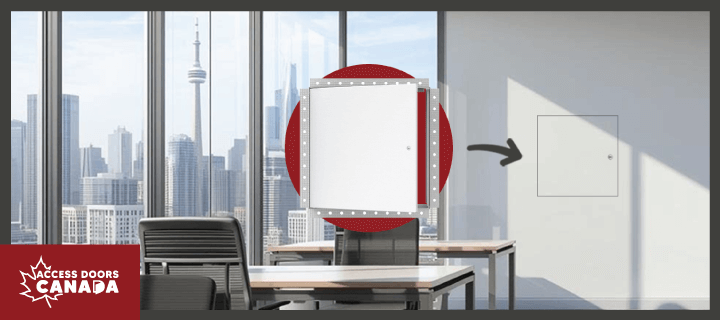
Aesthetic integration matters in educational and government environments. Panels with concealed hinges, mud-in flanges, or paint-ready finishes provide clean lines, ensuring that essential access points do not disrupt interior design.
Uncertain about the right access panel for your project? Let our specialists assist you. Request a quote now for high-quality institutional access doors shipped nationwide.
Which Codes and Standards Matter Most for Institutional Construction in Canada?
Choosing institutional access doors in Canada involves navigating multiple layers of code and regulatory requirements. Specifiers must consider the following primary standards:
1. National Building Code of Canada
NBC regulates fire-resistance ratings, egress, and enclosure requirements. For access panels, this includes:
- Fire-resistance testing requirements
- Approved installation within rated assemblies
- Closure and latch performance criteria
2. Provincial Building Codes
Provinces adopt NBC with modifications. For example, the Ontario Building Code may impose additional fire or accessibility provisions. On the other hand, the British Columbia Building Code includes seismic considerations relevant to panel anchoring.
3. National Fire Protection Association Standards
While Canada does not adopt NFPA codes directly, many institutions reference NFPA standards in facility guidelines.
4. ULC Testing
Some panels require ULC-S101 fire testing, ULC-S112 testing for fire-protection materials, and various CSA standards related to materials and performance. These certifications help confirm that the panel will perform as expected in a public building.
5. Government and Healthcare Procurement Standards
Hospitals and government projects may also reference:
- LEED or sustainability requirements
- Accessibility guidelines
- Physical security directives
- Infection prevention standards
Shop code-compliant access panels for schools, hospitals, and government buildings, and rely on our expertise to create custom access solutions that align with your building standards.
What Features Do Tamper-Proof and Heavy-Duty Access Panels Offer?
Tamper-proof access panels offer high-security construction, impact-resistant durability, and controlled access to essential building systems. They are built with reinforced frames, strong door assemblies, and secure locking mechanisms that resist prying, tampering, and heavy daily use.
These panels help protect mechanical, electrical, and plumbing components in busy institutional spaces while reducing vandalism and unauthorized interference. Their strength, reliability, and compliance-focused design make them essential for secure and long-lasting performance.
Which Access Panels Are Best Suited for Healthcare and Educational Facilities?
The access panels best suited for healthcare and educational facilities are those that offer secure locking, smooth and sanitary finishes, durability under heavy use, and strong fire-rated performance.
Here are some of them:
ADC-BAC-FRI-DF Fire-Rated Insulated Access Door With Mud-In Flange
The ADC-BAC-FRI-DF Fire-Rated Insulated Access Door With Mud-In Flange is a strong choice for healthcare and educational facilities because it blends a clean finish with dependable fire resistance and institutional-grade durability.
- Constructed from sturdy 16-gauge steel, the panel offers long-lasting strength suitable for demanding environments.
- It carries a fire rating of up to 2 hours for rated vertical wall assemblies, which helps meet essential code requirements in institutional buildings.
- The exposed perforated mud-in flanges allow installers to tape and mud the panel directly into the drywall, achieving a clean, seamless look.
- A self-latching mechanism that complies with NFPA 80 ensures the door closes securely and reliably after every use.
- Its mineral wool insulation is built into the door, enhancing its thermal performance while supporting its fire-resistant properties.
- The panel also qualifies for LEED v4 credits, making it a valuable option for projects with sustainability goals.
ADC-BAC-FRU Fire-Rated Insulated Panel Upward Opening
The ADC-BAC-FRU Fire-Rated Insulated Panel Upward Opening is another excellent option for institutional spaces, particularly where limited room or equipment placement calls for an upward-opening design. Its primary benefits include:
- The upward-opening configuration is ideal for areas with tight clearances, preventing interference with equipment or foot traffic.
- Rated for up to 2 hours on rated ceilings, the panel provides efficient performance for hospitals and schools.
- Its NFPA 80–compliant self-latching mechanism allows the door to secure itself without manual effort, improving convenience.
- The door is made from cold-rolled steel, providing it with strong resistance to rust, wear, and other forms of deterioration.
- A 2-inch layer of mineral wool insulation increases the panel’s thermal efficiency and supports its fire-resistant capabilities.
Frequently Asked Questions on Insulated Access Panels
1. What is the purpose of insulated access panels?
Insulated access panels are designed to reduce heat transfer, which helps maintain consistent temperatures around the mechanical, electrical, and plumbing systems hidden behind walls or ceilings.
By limiting heat loss or gain, they support overall building energy efficiency and create a more controlled environment for sensitive components. In institutional settings such as schools, hospitals, and government buildings, insulation panels also contribute to occupant comfort, noise reduction, and improved performance of the systems they protect.
2. Are insulated access panels fire-rated?
They can be fire-rated, but this depends entirely on the specific model and its certification. Some insulated panels are tested and approved to meet 1-hour or 2-hour fire-resistance requirements for rated wall or ceiling assemblies.
Others may provide insulation benefits without meeting fire-rating standards. For any institutional project, it is essential to verify the manufacturer’s fire-rating documentation to ensure the panel complies with local building codes and the intended application.
3. How long do insulated access panels last?
Insulated access panels typically offer a long service life, often lasting as long as the wall or ceiling in which they are installed. Their durability comes from materials such as 16-gauge or cold-rolled steel, which resist corrosion, impact, and wear in demanding environments.
With proper installation and occasional maintenance of hinges, latches, and seals, these panels can remain functional for many years, even in high-traffic institutional settings like schools and healthcare facilities.
To Sum It Up
Choosing the right access panel for schools, hospitals, and government facilities can be easy once you know that insulated, fire-rated, and tamper-resistant models offer the durability and performance these institutions rely on. These features help maintain essential utilities and ensure secure access in high-traffic areas.
At Access Doors Canada, we offer a wide range of institutional-grade access panels designed to meet the needs of public buildings, from seamless drywall finishes to heavy-duty fire-rated solutions. Our team can help you select the right model for your project and ensure it aligns with building code requirements.
Call us at +1-888-327-5471 for expert assistance and product recommendations.


