



How to Choose the Right Access Panel Size for Commercial Service Zones

Choosing the correct access panel size starts with understanding how commercial service zones are designed and maintained. These zones conceal mechanical, electrical, and plumbing (MEP) systems within wall and ceiling assemblies, requiring access solutions that balance service requirements with finished construction.
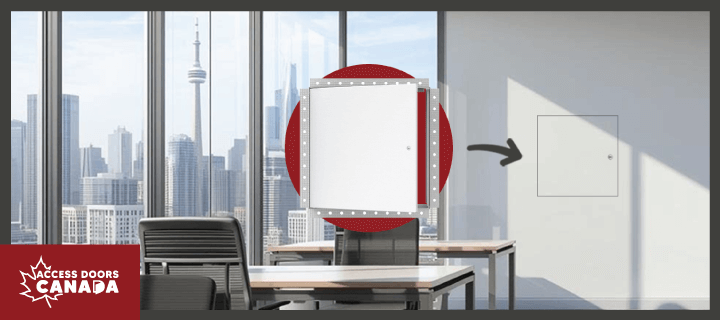
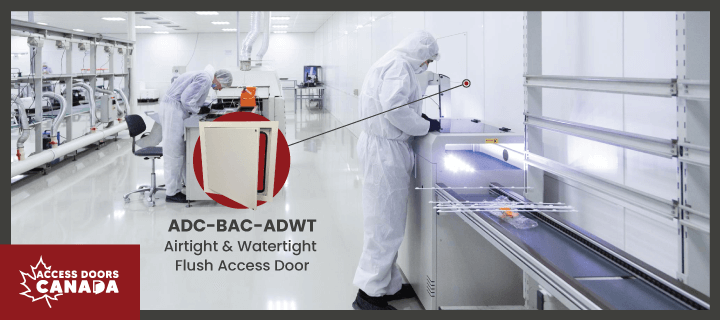
Access panel options such as the ADC-BAC-IVH Invisa Hatch™ Drywall Inlay with Fully Detachable Hatch and the ADC-BAC-UAP Flush Universal Access Door with Exposed Flanges are designed to address different commercial maintenance access requirements. When sized correctly, they allow inspections, maintenance, and repairs to be carried out efficiently without disrupting surrounding assemblies.
In this article, we’ll discuss best practices for access door size selection and examine how the ADC-BAC-IVH and ADC-BAC-UAP enable efficient, service-ready access in commercial applications.
Why Does Access Panel Size Matter in Commercial Service Zones?
Access panel size matters because it determines whether concealed building services can be accessed, inspected, and maintained without damaging surrounding construction.
In commercial service zone access, the panel opening must allow sufficient reach, visibility, and tool clearance for technicians and inspectors. Panels that are too small limit access even when systems are installed correctly.
Improper access panel sizing frequently leads to unsafe working conditions, inefficient servicing, and compromised inspection readiness. In Canada, inspectors must be able to visually confirm installations without obstruction, making correct sizing critical for compliance.
When access panels are sized appropriately, commercial wall and ceiling assemblies remain intact, and the building delivers higher lifecycle maintenance value.
Choose access panels that adapt to a wide range of sizing requirements for commercial service zones. When standard dimensions are not suitable for your project, custom access solutions are available to ensure proper service access and long-term performance. Contact us to learn how our structured ordering process helps you specify the right size from the start and avoid costly field modifications.
How Do Undersized Access Panels Create Rework and Inspection Problems?
Undersized access panels create rework and site inspection problems by limiting access to concealed services. When openings restrict visibility or reach, inspectors may be unable to verify installations, leading to failed inspections, delayed approvals, or requests to enlarge access openings.
Maintenance teams face similar limitations during servicing. Restricted openings can prevent technicians from operating components or using tools effectively, often requiring cuts to wall or ceiling finishes to complete routine tasks. This results in damage to commercial assemblies and unnecessary repair work.
Over time, undersized panels contribute to field modifications, compromised fire-rated or acoustic assemblies, higher maintenance labour costs, and reduced lifecycle value. Proper access panel specification across Canada focuses on selecting the correct panel sizes from the outset to avoid rework and ensure long-term serviceability.
How Can ADC-BAC-IVH and ADC-BAC-UAP Be Sized to Support Different Service Needs?
TheADC-BAC-IVH Invisa Hatch™ Drywall Inlay with Fully Detachable Hatch and the ADC-BAC-UAP Flush Universal Access Door with Exposed Flang can be sized to support different service needs by matching access openings to service complexity, clearance requirements, and access frequency.
The ADC-BAC-IVH access panel is typically sized for:
- Service points requiring visual inspection and hand access
- Valves, electrical junctions, and control components requiring periodic maintenance
- Finished wall and ceiling assemblies where a concealed, flush appearance is required
- Applications where a fully detachable hatch provides a clear, unobstructed opening
- Locations where access is necessary but equipment removal is unlikely.
The ADC-BAC-UAP access panel is typically sized for:
- Larger mechanical, electrical, and plumbing systems
- Service zones requiring frequent or repeated access
- Installations needing wider openings for technician movement and tool use
- Utility areas where structural support around the opening is important
- Non-rated masonry and drywall assemblies are subject to wear or moisture.
Sizing each access panel according to service demands ensures inspection readiness, efficient maintenance, and long-term performance of commercial wall and ceiling assemblies without the need for field modifications.
Not sure where to start with your order? Request a quote, and we’ll help clarify options, requirements, and next steps to ensure a smooth ordering process.
When Should Access Panel Sizing Be Finalized During Commercial Project Planning?
Access panel sizing should be finalized during the design development phase, before construction documents are issued. At this stage, wall and ceiling assemblies, service routing, and access requirements can still be coordinated without disruption.
Finalizing access panel sizes early allows coordination with mechanical, electrical, and plumbing trades while layouts remain flexible. This helps ensure access openings are correctly located and sized within wall and ceiling assemblies, reducing the risk of conflicts or undersized panels.
Delaying access panel decisions until construction increases the likelihood of field modifications, inspection delays, and damage to finished assemblies. Early specification also supports more accurate procurement and installation planning.
When specifying access panels such as ADC-BAC-IVH and ADC-BAC-UAP, confirming sizes during design development supports inspection access, maintenance clearance, and long-term serviceability without the need for rework.
Frequently Asked Questions About Access Panel Sizing
1. How do I determine the minimum access panel size required?
Access panel size should be determined by the dimensions of the concealed service component and the required clearance for safe inspection, operation, and maintenance. Where components may need to be removed or replaced, the opening should also allow for safe removal.
2. Should access panels be sized differently for frequent maintenance areas?
Yes. Areas requiring regular access should be provided with larger access openings to support efficient servicing and reduce time spent working in confined conditions. Larger panels improve visibility, provide better tool access, and reduce the risk of accidental damage to surrounding finishes during repeated maintenance activities. A wide range of custom access panels can be designed to suit specific larger applications, materials, and compliance requirements.
3. Can undersized access panels cause inspection failures?
Yes. Access panels that limit visibility or physical reach may prevent inspectors from properly verifying installations. This can result in failed inspections, delayed approvals, or formal requests to enlarge access openings. In many cases, enlarging panels after installation leads to additional labour, patching work, and disruption to finished assemblies.
4. When should access panel sizes be finalized during a project?
Access panel sizing should be finalized during the design development phase, before construction documents are issued. Early coordination allows access openings to be integrated with framing, mechanical, electrical, and plumbing systems, reducing the risk of conflicts, rework, or undersized panels.
To Sum It Up
Choosing the right access panel size for commercial service zones is essential for inspection compliance, efficient maintenance access, and the long-term performance of wall and ceiling assemblies. Correct sizing helps protect finished surfaces and ensures systems remain accessible throughout the building lifecycle.
At Access Doors Canada, we assist design and construction teams by guiding access panel sizing, placement, and specification based on real service and inspection requirements. Our technical support helps reduce field modifications and supports code-compliant, service-ready installations.
Call us at +1-888-327-5471 to discuss your project requirements and receive technical support in selecting the proper access panel.


