




What Are the Top Construction Technology Trends Shaping Canada’s Industry in 2026?
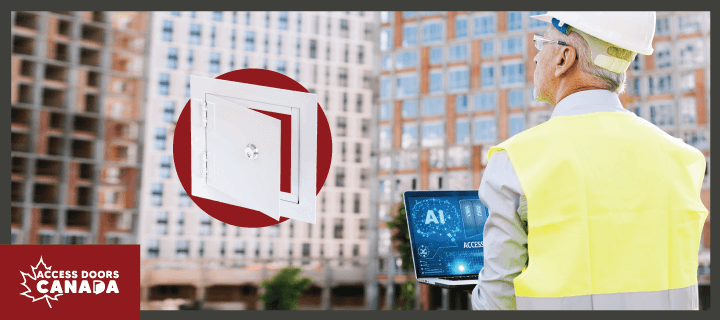
Canada's construction industry in 2026 is being shaped by technology trends that prioritize resilience, efficiency, and regulatory compliance. From artificial intelligence to sustainability analytics, the Canadian construction innovation is transforming the nation's environment.
The ADC-BAC-HSS High Security Access Panel aligns with this shift by delivering reliable security, durability, and seamless architectural integration for modern construction projects and digital construction in Canada.
In this article, we'll discuss the key technology-driven forces shaping Canada's construction sector in 2026 and how they are influencing the design, selection, and specification of access doors and panels.
What Construction Technology Trends Are Reshaping Canada's Industry in 2026?
Artificial Intelligence (AI) and Predictive Analytics
AI-powered tools are reshaping construction across Canada by improving planning, cost forecasting, and risk management through data-driven decision-making. Predictive analytics help contractors reduce delays, optimize schedules, and improve safety, positioning AI as a core element of 2026 construction tech predictions.
Building Information Modelling (BIM) and Digital Twins
BIM is now standard across commercial and institutional projects in Canada. In 2026, digital twins are expanding the value of BIM, enabling real-time monitoring, maintenance planning, and lifecycle performance tracking of buildings.
Sustainable Construction Technologies
Advanced sustainability analytics, low-carbon materials, and energy-modelling software are helping firms meet Canada's net-zero and green building requirements. Technology-driven sustainability is now essential for regulatory compliance and long-term asset value.
Modular and Prefabricated Construction
Off-site construction continues to grow as a solution to labour shortages and rising costs. Prefabrication technologies improve quality control, reduce waste, and accelerate project timelines across residential and commercial sectors, making them a key trend for 2026.
Smart Job Sites and Connected Equipment
IoT-enabled equipment, wearables, and smart sensors are transforming job site management. They enhance safety, track productivity, and provide real-time data to support faster, more informed decision-making.
Stay ahead of construction trends in Canada this 2026 with high-performance access solutions designed for evolving codes and digital workflows. We offer custom access doors built to meet the demands of a changing construction landscape.
How Will AI and Automation Improve Design and Jobsite Performance?
AI and automation will enhance design and job site performance by reducing inefficiencies and improving decision-making accuracy. Design teams are using AI tools to identify clashes, optimize layouts, and predict constructability issues before breaking ground.
Benefits of AI And Automation on Canadian Jobsites
- Faster design iterations with fewer errors
- Automated quantity takeoffs and procurement forecasting
- Robotics and layout automation addressing labour shortages
- Improved safety monitoring through real-time data collection.
Why Are Digital Twins and BIM Adoption Accelerating Commercial Construction?
Digital twins and BIM adoption are accelerating in commercial construction because they deliver full lifecycle visibility and improved coordination across all project phases. In Canada, owners and contractors increasingly rely on BIM to manage complex mechanical, electrical, and fire-protection systems, ensuring accuracy from design through long-term operation.
Digital twins extend BIM's value beyond construction by enabling real-time performance monitoring once a building is occupied. Together, these technologies are shaping access panel trends in 2026 in Canada, as access doors and panels must be fully specifiable within digital models and remain accurate throughout the building's entire lifecycle.
How Are Sustainability and Energy-Modelling Technologies Influencing Material Selection?
Sustainability and energy-modelling technologies are influencing material selection by making building performance measurable at the design stage. Canadian projects now rely on simulation tools to assess energy use, emissions, and lifecycle impacts before materials are approved.
Access products are no exception, as panels must support a high-performance building envelope without compromising accessibility. These expectations are reshaping the 2026 access door market in Canada, where energy efficiency and durability are critical decision factors.
Related: Commercial Construction in the North: Top 5 Trends for Commercial Projects
What Role Does Product Performance Play as Construction Technology Advances?
Product performance plays a central role as construction technology advances because modern, data-driven projects demand verified and measurable outcomes. Contractors, architects, and specifiers in Canada now select products based on proven thermal performance, certified fire ratings, and documented durability, rather than relying on assumptions or legacy preferences.
As digital construction tools such as BIM and digital twins become standard, products must also be compatible with digital documentation and maintain accuracy throughout a building's lifecycle.
Navigating new regulations and technology-driven construction workflows can be complex. Our experienced team is here to help you select the right access products for your project. Contact us to receive product recommendations, pricing, and solutions aligned with your project requirements.
How Can Access Doors Canada Support Tech-Driven Construction Workflows?
Access Doors Canada supports tech-driven construction workflows by offering access solutions designed for digital coordination and regulatory compliance. As modern projects rely on BIM models, energy simulations, and automated schedules, access panels must integrate seamlessly into these systems while maintaining reliable performance.
The ADC-BAC-HSS High Security Access Panel reflects these requirements through its durable, tamper-resistant design, making it well suited for commercial environments where restricted access is essential. Its reliable performance supports accurate planning, regulatory compliance, and efficient facility management throughout the building lifecycle.
The panel's cold-rolled steel construction also offers strong resistance to corrosion and wear, supporting long-term performance and reduced maintenance over the building lifecycle.
To address contractor efficiency and streamlined workflows, the exposed flange design allows for straightforward installation in non-rated drywall and masonry applications. Together, these features reflect current construction trends that prioritize security, durability, and efficient installation without compromising compliance or performance.
Frequently Asked Questions on High-Security Access Doors
1. What makes a high security access panel different from a standard access door?
High security access panels are engineered to prevent unauthorized access to critical building components. They feature reinforced construction, tamper-resistant hardware, and secure locking mechanisms, making them suitable for sensitive environments such as commercial infrastructure, utilities, data rooms, and restricted service areas.
2. Do high security access panels come in different sizes?
Yes. High security access panels are available in a range of standard sizes and can often be manufactured in custom dimensions to meet specific project requirements. This flexibility allows them to accommodate various wall and ceiling openings while maintaining security and performance standards.
3. Do high security access panels support Canadian regulatory and safety requirements?
High-security access panels are manufactured to align with Canadian building codes, safety standards, and durability requirements where applicable. Their performance-focused design helps maintain compliance while minimizing maintenance disruptions throughout the building's lifespan.
To Sum It Up
Canada's construction industry in 2026 is defined by technology-driven accountability and performance. AI, BIM, and sustainability tools are transforming how buildings are planned, constructed, and maintained, placing higher expectations on every building component.
Understanding access panel trends in 2026 in Canada allows project teams to future-proof their designs while meeting evolving regulatory and environmental requirements.
At Access Doors Canada, we help contractors, architects, and builders select access solutions that align with modern construction technologies and long-term performance goals.
Call us at +1-888-327-5471 to speak with a knowledgeable specialist and ensure your project is equipped for the demands of advanced construction.


