



Exploring the Architectural Marvels of Canada's Most Iconic Buildings
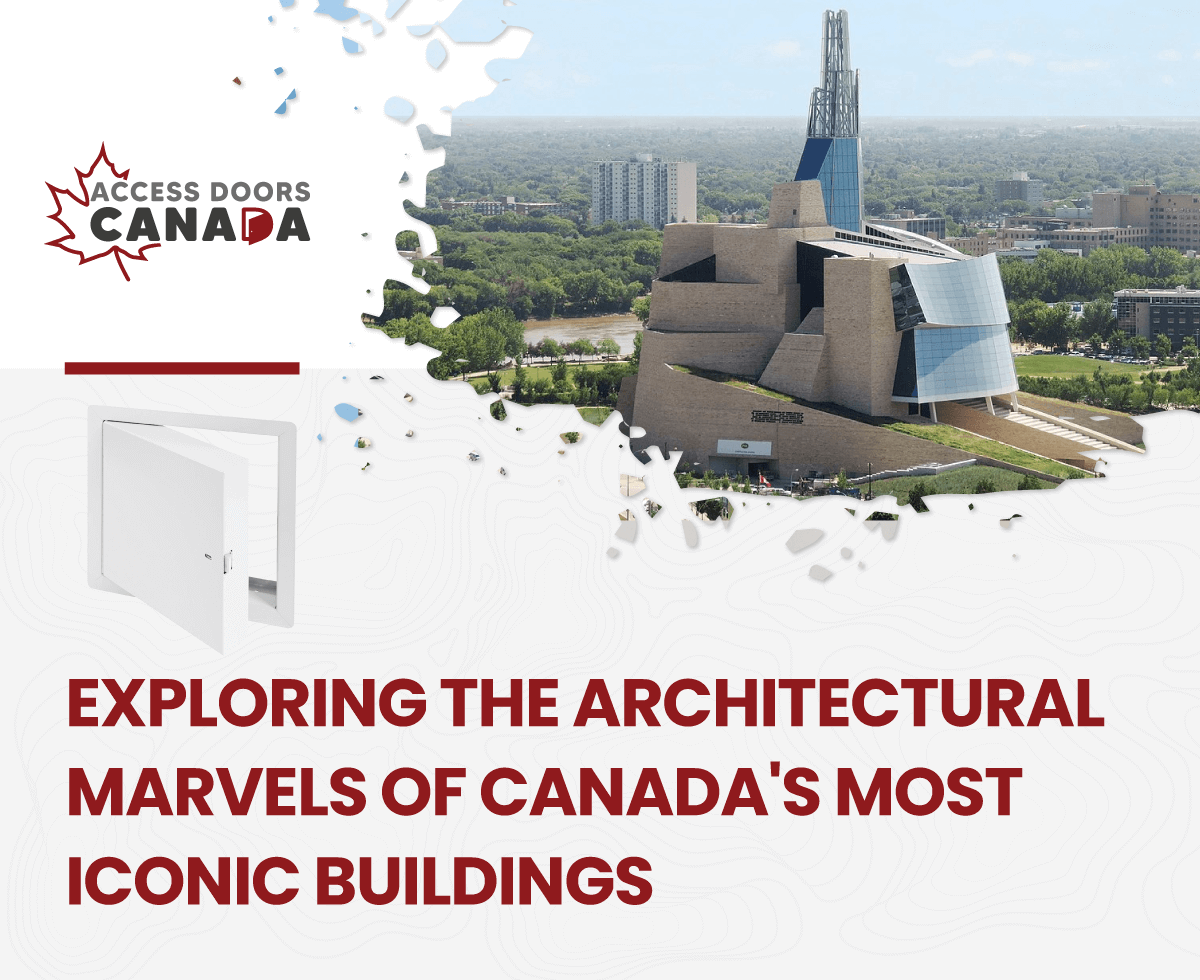
Canada’s most iconic buildings show how architecture can balance history, innovation, public use, and long-term performance. From heritage hotels and government buildings to transit hubs, museums, libraries, and high-rise towers, each structure depends on systems that must remain accessible for inspection, maintenance, and repair.
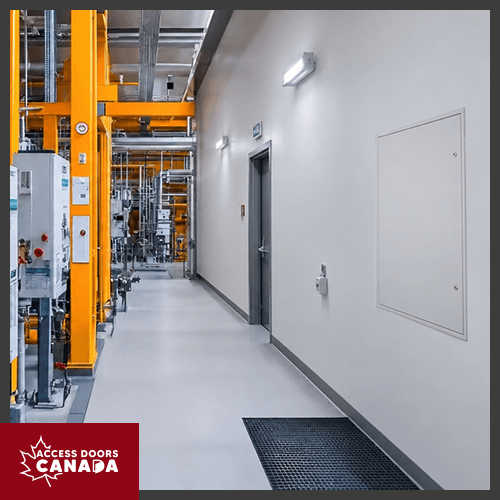
That’s where access doors fit in. The right access door lets you reach HVAC, plumbing, electrical, fire protection, and security systems without disrupting the building’s appearance or damaging finished surfaces. This helps protect both the design intent and day-to-day functionality.
In this article, we’ll explore some of Canada’s most iconic buildings and explain how access doors support maintenance, safety, and the architectural integration of these buildings.
What Are Some of Canada’s Most Iconic Architectural Landmarks?
Some of Canada’s most iconic architectural landmarks include the CN Tower, Fairmont Le Château Frontenac, the Art Gallery of Ontario, the Canadian Museum for Human Rights, and the Parliament Buildings.
These structures stand out because they combine a strong design identity with public, cultural, historic, or engineering significance.
Let’s look at each building in detail.
1 . The CN Tower: Engineering at Its Peak
The CN Tower is one of Canada’s most recognizable engineering landmarks because of its height and role in Toronto’s skyline. Construction began in 1973, was completed in 1975, and opened to the public in 1976. At 553 metres, it remained the world’s tallest freestanding structure until it was surpassed by the Burj Khalifa in 2009.
Today, the CN Tower serves as an observation tower, a tourism destination, a communications structure, and a high-traffic public attraction. Visitors come for its dining, events, and skyline experience, which means its building systems must support both daily operations and strict safety requirements.
Best-fit access solutions:
- Flush access doors: Help maintain smooth interior surfaces in public-facing areas, service corridors, and finished spaces.
- Ceiling access doors: Provide access to overhead HVAC, lighting, electrical, and communications systems.
- Durable access panels: Support repeated inspections and maintenance in high-use areas without compromising the surrounding finish.
2. Fairmont Le Château Frontenac: Preserving Historical Elegance
Fairmont Le Château Frontenac has over 130 years of history. The hotel has welcomed royalty over the years, including Queen Elizabeth II, with a luxury suite designated in honour of her official visits. Its first wing was inaugurated in 1893, and the hotel sits on Cap Diamant overlooking the St. Lawrence River in the heart of Québec City.
The building continues to operate as a luxury hotel, which means guest comfort, energy performance, HVAC access, and interior preservation are crucial.
Best-fit access solutions:
- HVAC access doors: Make it easier to service heating, cooling, and ventilation systems serving guest rooms, public spaces, and back-of-house areas.
- Insulated access doors: Help support thermal performance in conditioned spaces.
- Recessed access panels: Blend into drywall, tile, or specialty finishes where visual consistency is important.
3. The Art Gallery of Ontario: Merging Old and New
The Art Gallery of Ontario (AGO) brings together historic architecture, major art collections, and a modern redesign. The AGO reopened in 2008 after a major expansion and renovation by architect Frank Gehry, adding features such as the glass-and-wood façade along Dundas Street and the Galleria Italia sculpture gallery.
As a gallery, the building must protect artwork, manage visitor flow, support exhibitions, and maintain controlled interior conditions. As a result, access points need to be discreet, as visible or poorly placed panels can distract from artwork, walls, display areas, and the visitor experience.
Best-fit access solutions:
- Recessed access doors: Allow panels to be finished with surrounding materials, helping them blend into gallery walls and ceilings.
- General-purpose access panels: Provide reliable access for routine maintenance in storage rooms, service corridors, and back-of-house spaces.
- Flush access doors: Support a clean, minimal appearance in corridors, exhibit-adjacent areas, and finished interiors.
4. The Canadian Museum for Human Rights: A Structural Innovation
The Canadian Museum for Human Rights is a landmark because of its national purpose, distinctive architecture, and symbolic design. Opened in 2014, the museum was designed by architect Antoine Predock and is known for its Tower of Hope, Tyndall limestone, and glass form on Winnipeg’s skyline.
The museum operates as a public cultural space with exhibits, educational programs, and events. This makes safety, accessibility, security, and system reliability crucial. Access doors in this type of building must support maintenance while protecting restricted areas and critical infrastructure.
Best-fit access solutions:
- Fire-rated access doors: Help maintain fire-rated wall and ceiling assemblies where required.
- Security access panels: Restrict access to electrical, mechanical, communications, and sensitive service areas.
- Durable access doors: Withstand repeated use in public facilities, service zones, and back-of-house maintenance areas.
5. The Parliament Buildings: Heritage and Functionality
The Parliament Buildings have a Gothic Revival architecture and represent Canadian democracy and national heritage. Centre Block was rebuilt after the 1916 fire and completed in 1927, with the Peace Tower becoming one of Canada’s most recognizable national symbols.
These buildings support parliamentary work, public tours, ceremonial functions, security operations, and long-term heritage preservation. As a result, access doors must be carefully selected to support modernization and maintenance without interfering with historic materials, secure areas, or fire-safety requirements.
Best-fit access solutions:
- Security access doors: Help protect restricted spaces, service rooms, and sensitive building systems.
- Gasketed access doors: Support air sealing and environmental control in areas exposed to drafts, dust, or pressure differences.
- Fire-rated access doors: Help maintain fire separation in rated walls and ceilings.
- Custom access doors: Accommodate unique openings, heritage conditions, and project-specific finish requirements.
Which Ongoing Canadian Projects Are at the Forefront of Architectural Innovation?
One Bloor West, Sen̓áḵw, Oakridge Park, Ādisōke, and Scotia Place are among the ongoing Canadian projects at the forefront of architectural innovation.
These projects are reshaping skylines, introducing new approaches to mixed-use development, and setting higher expectations for sustainability, public access, and long-term building performance.
Let’s look at each project in detail.
1. One Bloor West: Toronto’s First Supertall Building
One Bloor West marks a major shift in Toronto’s skyline as Canada’s first supertall building, reaching the 300-metre threshold used to define supertall structures.
Once complete, the 85-storey tower is expected to stand 308.6 metres and include condominium residences, retail space, and a five-star hotel component at one of Toronto’s most prominent intersections.
Construction is continuing under Tridel, with interim occupancy expected to begin in spring 2027 and full completion projected for early 2028.
Since the building combines luxury residences, hotel functions, retail space, and high-rise mechanical systems, access planning must support both front-of-house finishes and back-of-house maintenance.
Best-fit access solutions:
- Fire-rated access doors: Support rated service rooms, shafts, and mechanical spaces.
- Ceiling access doors: Provide access to HVAC, lighting, electrical, and control systems above corridors and shared spaces.
- Security access panels: Help protect telecom, controls, and restricted service areas.
- Flush access doors: Maintain clean walls and ceilings in premium-finished interiors.
2. Sen̓áḵw: Vancouver’s Indigenous-Led Urban Community
Sen̓áḵw stands out as one of Canada’s most significant Indigenous-led urban developments. Located on Squamish Nation land near False Creek, the project represents the return of the Squamish People to an ancestral village site. It introduces a major rental community in one of Vancouver’s most visible urban areas.
Phase One is nearing completion, with all three towers reaching full height at 27, 32, and 40 storeys. The first phase is expected to open more than 1,400 new homes in 2026, along with retail, public spaces, cultural features, and amenities such as a gym, pool, wellness centre, and social lounge.
Best-fit access solutions:
- Fire-rated access doors: Help protect rated corridors, shafts, and service areas in the residential towers.
- Gasketed access doors: Support air sealing around mechanical, energy, and utility spaces.
- Security access panels: Limit access to telecom, controls, and building operations systems.
- Ceiling access doors: Provide access above corridors, amenity areas, and shared residential spaces.
3. Oakridge Park: Vancouver’s New Mixed-Use City Centre
Oakridge Park is being positioned as a second city centre for Vancouver, bringing together retail, culture, dining, wellness, transit access, residential life, and public green space in a large mixed-use redevelopment.
The project is moving through phased openings, with a collection of global retail brands scheduled to debut in spring 2026. Oakridge Park also sets a strong sustainability benchmark, with a neighbourhood energy system designed to reduce greenhouse gas emissions by more than 70% and a plan to transform nearly 20 acres of asphalt into 13 acres of green space.
Best-fit access solutions:
- Recessed access doors: Blend into premium retail, cultural, and public-facing interiors.
- Fire-rated access doors: Support rated walls, ceilings, service cores, and multi-use occupancy areas.
- Security access panels: Protect building management, loading, telecom, and district-energy systems.
- Gasketed access doors: Help control drafts, dust, and air transfer in service and mechanical areas.
4. Ādisōke: Ottawa’s New Library and Archives Landmark
Ādisōke will bring together the Ottawa Public Library’s Central Branch and Library and Archives Canada’s public services into a single shared facility. The building is designed as a modern, inclusive place for learning, research, exhibitions, and events.
Construction is underway, with the project expected to reach completion in 2026. Recent updates show exterior terraces, seating areas, finished doors, acoustic ceilings and walls, lighting, millwork, and atrium work advancing.
The facility is also expected to attract more than 1.7 million visitors annually, making safe and discreet access to systems especially important.
Best-fit access solutions:
- Recessed access doors: Preserve clean finishes in reading rooms, public areas, galleries, and gathering spaces.
- Acoustic access panels: Support maintenance access in quiet areas where sound control is important.
- Fire-rated access doors: Help protect rated assemblies in public, archival, and back-of-house areas.
- Security access panels: Restrict access to IT rooms, archive-support areas, and staff-only service spaces.
5. Scotia Place: Calgary’s New Event Centre
Scotia Place will replace the Saddledome as Calgary’s major event centre and serve as a key anchor in the city’s Culture + Entertainment District. The building is designed for NHL games, concerts, community events, food and beverage spaces, public gathering areas, and year-round district activity.
The project is expected to be handed over to Calgary Sports and Entertainment Corporation in the fall of 2027, with a public opening planned for the 2027/2028 NHL season. Construction reached a major milestone in March 2026 with the placement of the first roof truss, a 79-tonne steel structure designed to help support lighting, sound, and event equipment.
Best-fit access solutions:
- Oversized fire-rated access doors: Support access to major mechanical, event, and life-safety systems.
- Ceiling access doors: Provide access above concourses, concession areas, suites, and back-of-house corridors.
- Security access panels: Protect broadcast, telecom, lighting control, and operations rooms.
- Durable access doors: Withstand frequent use in high-traffic venues with heavy event schedules.
FAQs on Canada’s Iconic Buildings and Access Door Planning
1. Why do iconic buildings need carefully planned maintenance access?
Iconic buildings require carefully planned maintenance access to ensure their systems are serviced without compromising the structure’s appearance, safety, or performance.
The right access doors help maintenance teams reach concealed systems quickly, while reducing the need for unnecessary wall or ceiling damage during inspections, repairs, or upgrades.
2. How do access doors support heritage preservation?
Access doors support heritage preservation by allowing maintenance teams to reach hidden systems with minimal disruption to original or sensitive finishes.
In older buildings, this is especially important because walls, ceilings, millwork, stone, and plaster details may be difficult or costly to repair once damaged.
3. How should you choose access doors for complex Canadian buildings?
You should choose access doors based on the building’s use, finish requirements, safety needs, and maintenance frequency. A heritage hotel, transit station, public museum, and high-rise tower will require different types of panels in specific areas.
As a result, before selecting an access door, consider:
- Location: Wall, ceiling, floor, exterior, or service area.
- Finish: Flush, recessed, painted, tiled, or concealed.
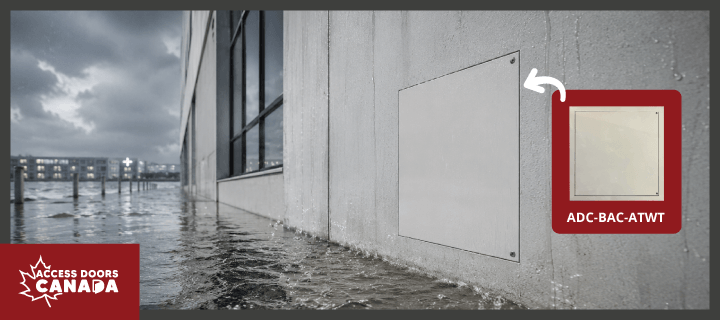
- Performance: Fire-rated, insulated, gasketed, airtight, or watertight.
- Security: Locking, tamper-resistant, or restricted access.
- Maintenance: Frequency of inspections, repairs, and equipment servicing.
- Code Requirements: Fire separation, public safety, and project-specific standards.
Trust Access Doors Canada for Optimized Architectural Integration
Canada’s iconic buildings show that design and functionality must work together. Whether you’re maintaining a historic landmark, specifying products for a transit project, or planning access points in a modern high-rise, the right access door helps protect the finished space while keeping essential systems reachable.
Access Doors Canada offers access doors and panels for commercial, institutional, residential, and public projects across Canada. From flush and recessed access doors to fire-rated, insulated, gasketed, HVAC, ceiling, and security access panels, you can choose solutions that match your project’s design and performance needs.
For product support or custom access door options, contact us at +1-888-327-5471.


