



Which Access Panels Help Meet LEED Requirements in Canada?
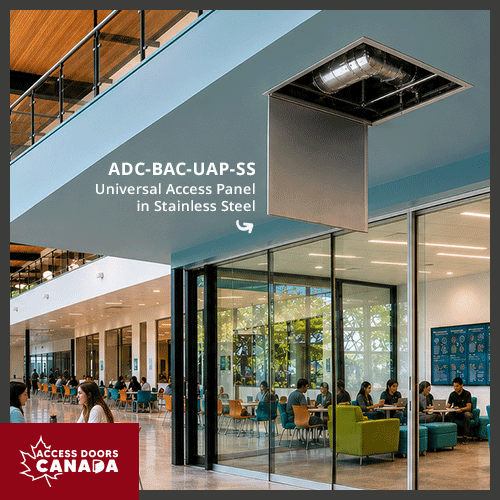
Access panels that support LEED requirements in Canada are those built for long service life, corrosion resistance, material durability, and thermal performance.
Stainless steel models are among the strongest candidates. Their material composition, resistance to deterioration, and reduced replacement cycles directly support the credit pathways tied to Materials and Resources under LEED v4.
For envelope applications, insulated panels with air sealing options also contribute to Energy and Atmosphere credits by reducing thermal bridging and uncontrolled air movement.
In this article, we'll cover what makes access panels relevant to LEED certification and which product attributes support specific credit pathways. We'll also look at what specifiers should look for and how the ADC-BAC-UAP-SS fits into LEED-aligned construction.
What Makes Access Panels Relevant to LEED Certification on Canadian Projects?
Access panels are relevant to LEED certification because they’re permanently installed building products. This places them within the scope of LEED's Materials and Resources (MR) and Energy and Atmosphere (EA) credit calculations.
The Materials and Resources category of LEED Design and Construction rating systems has always required permanently installed building products to be included in credit calculations.
Most of these products fall into CSI MasterFormat Divisions 03-10, 31, and 32. Access panels installed in walls and ceilings typically fall within these divisions, which means they count toward MR credit thresholds.
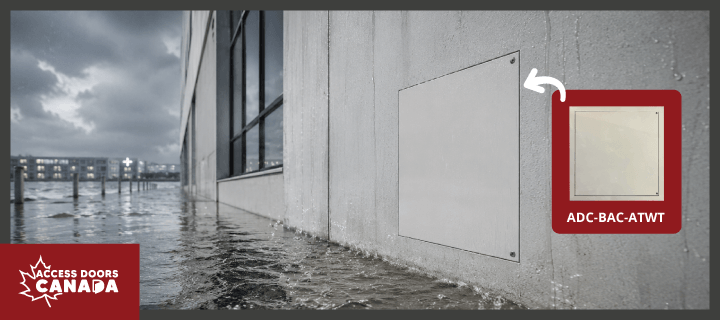
Panels installed in envelope assemblies also carry EA implications. An access panel that allows air leakage or thermal transfer through an otherwise well-insulated wall or ceiling undermines the building's energy performance. Specifying panels with insulation and airtight sealing at these locations keeps the envelope performing as designed.
That said, it is important to clarify the scope. LEED certification is achieved at the project level. No single product earns a credit on its own.
What access panels do is contribute attributes, such as recycled content, product transparency documentation, and lifecycle durability, that factor into broader credit calculations across the project.
If you’re specifying for a LEED-aligned build, browse our full range of LEED-Certified access panels suited for Canadian commercial and institutional projects to find options that align with your project's performance and documentation requirements.
Which Access Panel Attributes Support LEED Credit Pathways?
Access panel attributes that support LEED credit pathways include recycled material content, documented product transparency, long-term durability, corrosion resistance, and thermal performance.
These attributes map to three primary LEED v4 credit categories: Materials and Resources (MR), Energy and Atmosphere (EA), and Indoor Environmental Quality (EQ).
Materials and Resources
The MR category rewards projects for selecting materials with verified environmental attributes. Steel products have a structural advantage in this area because the LEED v4 framework accounts for their composition.
Under LEED v4, steel is the only material with an approved default recycled content figure built into the reference guide. Where no supplier-specific data is available, a 25 percent post-consumer recycled content value can be applied. When a manufacturer provides verified data, that figure can be used directly in credit calculations.
Steel is also fully recyclable at the end of life without degrading in material quality, which supports both the recycled content credit and the building lifecycle impact reduction credit.
Energy and Atmosphere
Access panels installed in walls or ceilings that form part of the building envelope directly affect a building's thermal performance. Panels without adequate insulation or sealing create pathways for air leakage and thermal transfer, which increases energy demand and works against EA credit goals.
Insulated access panels reduce thermal bridging at the point of installation. When paired with neoprene gasketing or compression seals, they also limit uncontrolled air movement through the building envelope. Both attributes support tighter energy performance modeling, which feeds into EA credit calculations under LEED v4.
Indoor Environmental Quality
Access panels installed in moisture-prone areas, such as mechanical rooms, washrooms, or food service spaces, require materials that won’t corrode or degrade in a way that affects indoor air quality.
Stainless steel does not rust under normal conditions and doesn’t require chemical coatings that could compromise indoor environmental quality.
What Should Specifiers Look for When Selecting Access Panels for LEED-Aligned Builds?
Specifiers for LEED-aligned buildings should look for access panels that provide material durability, corrosion resistance, thermal performance, and product documentation.
Here are the key attributes to evaluate:
- LEED compliance statement: Look for products that explicitly state LEED v4 readiness. This signals that the manufacturer has prepared the construction documentation/submittals needed to support certification.
- Material grade: Specify panels built from industrial-grade stainless steel. Grade 304 is the standard for corrosion resistance in commercial and institutional environments. It withstands moisture, cleaning agents, and temperature fluctuations without surface degradation.
- Recycled content documentation: For MR credit contributions, you need supplier-confirmed recycled content data. Confirm that the manufacturer can provide documentation that supports your project's LEED submittal.
- Long service life: Select panels designed to perform over the full building lifecycle. Frequent replacements create construction and demolition waste, which runs counter to LEED's waste management goals.
- Insulation value: For envelope applications, specify panels with a rated insulation value. Insulated panels reduce thermal bridging and support the energy performance modeling required for EA credits.
- Gasketing and sealing options: For projects where air sealing or moisture control is a priority, panels with neoprene gasketing add a layer of performance that enhances the building envelope's overall tightness.
- Finish and coating: Specify finishes that are durable and don’t require high-VOC maintenance products. Powder coat finishes that hold up over time reduce the need for refinishing and support EQ goals.
Related: What Are the Best LEED-Qualified Access Doors for Canadian Construction?
How Does the ADC-BAC-UAP-SS Support LEED-Aligned Construction Requirements?
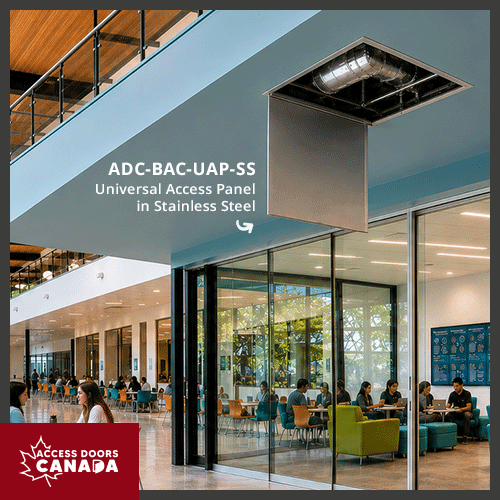
The ADC-BAC-UAP-SS Universal Access Panel in Stainless Steel supports LEED-aligned construction through its:
- Documented LEED v4 compliance.
- Material composition.
- Design attributes that hold up across the full-service life of a commercial or institutional building.
Let’s look at its key features in detail.
LEED v4 Compliance
The ADC-BAC-UAP-SS is LEED v4 compliant and is documented as a product that contributes to LEED credits. This makes it suitable for inclusion in LEED submittals.
For teams also working within Canadian code compliance requirements, the panel's documented attributes support the kind of material transparency that both LEED reviewers and local authorities expect on institutional and commercial builds.
Material Construction
The ADC-BAC-UAP-SS access panel is constructed from 16-gauge stainless steel 304 #4, which is one of the most corrosion-resistant grades used in commercial construction.
For specifiers sourcing sustainable access doors in Canada, this is important because fewer replacements over the building's life reduces construction waste and keeps the overall material footprint lower.
Configuration Options
The ADC-BAC-UAP-SS offers several options that expand its suitability for different LEED project environments. These include:
- Neoprene gasketing for building envelope access panel applications where air or moisture control is a priority.
- Multiple latch configurations, including key-operated, hex head, pinned hex head, handle-operated, and mortise preparation options.
- Individual packaging to reduce site waste during installation.
Installation and Integration
The panel features a screwdriver-operated cam latch and a concealed pin hinge, which allows efficient access with minimal hardware exposure.
Its flush design with a 1" exposed flange integrates cleanly into non-rated walls and ceilings without disrupting surrounding surfaces.
If you're looking to strengthen your LEED certification strategy, you can request a quote or explore our custom sizing options to confirm the ADC-BAC-UAP-SS access panel fits your project's specification and documentation requirements.
Frequently Asked Questions on LEED-Compliant Access Doors
1. Do access panels need to be individually LEED-certified to count toward a project's LEED score?
No. Individual products are not LEED-certified. LEED certification is applied at the project level. Access panels contribute to LEED credit calculations through their material attributes, such as recycled content, product disclosure documentation, and lifecycle durability.
2. Does the type of wall or ceiling surface affect which access panel I should specify for a LEED build?
Yes. The installation environment affects both the material requirements and the LEED credit implications.
For moisture-prone spaces such as mechanical rooms, washrooms, or food service areas, a stainless steel panel with a corrosion-resistant finish is the appropriate specification. For drywalled interiors with less humidity exposure, powder-coated panels may be sufficient.
3. Do insulated or energy-efficient access panels contribute more to LEED credits than standard models?
Insulated access panels can contribute more to certain LEED credit categories than standard models, particularly under Energy and Atmosphere. Energy-efficient access panels that reduce thermal transfer through walls or ceilings support a tighter building envelope, which directly factors into energy performance modeling.
For projects where envelope integrity is part of the LEED strategy, specifying insulated access panels is worth evaluating early in the design phase rather than treating it as an afterthought during construction documentation.
To Sum It Up
Although access panels aren't typically at the top of a LEED specification checklist, they're permanently installed products that fall within the scope of LEED's Materials and Resources credit.
Beyond MR, panels with insulation and air sealing attributes also support Energy and Atmosphere credit calculations, making product selection more consequential than it might initially appear.
When it comes to commercial and institutional builds in Canada, where corrosion resistance, hygiene, or aesthetic finish are non-negotiable, stainless steel access panels are ideal.
Recycled content materials, LEED v4 compliance documentation, and decades of reliable performance help them reduce both material waste and specification risk.
Contact our team or call +1-888-327-5471 to confirm specification details, documentation support, and product suitability for your LEED project.


