



Which Concealed Access Panels Are Used Most in High-Compliance Commercial Builds?
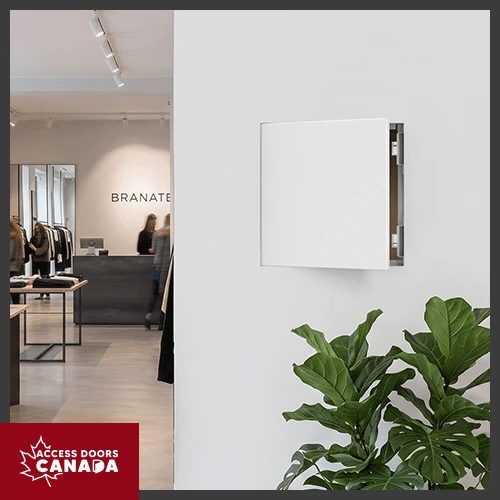
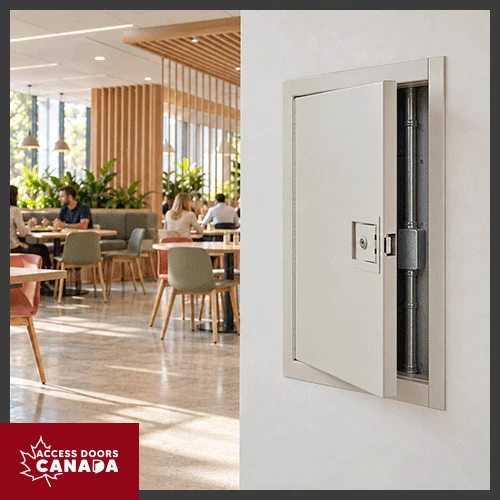
The most used concealed access panels in high-compliance commercial builds include concealed drywall, fire-rated, tamper-resistant, and inlay access panels.
High-compliance commercial buildings are expected to meet demanding standards for life safety, accessibility, hygiene, security, and long-term performance. That’s why it’s essential to select access solutions that support operational needs and the building's overall design.
Unlike traditional exposed access doors, the solutions mentioned allow architects to maintain an uninterrupted appearance and benefit from reliable access.
Why Are Concealed Access Panels Commonly Specified in High-Compliance Buildings?
Concealed access panels are commonly specified in high-compliance commercial buildings because they provide convenient access to essential services while supporting seamless interior finishes.
The combination of functionality and aesthetics has made concealed access panels a common specification in facilities such as:
- Hospitals and healthcare campuses
- Research laboratories
- Universities and schools
- Airports and transportation hubs
- Government buildings
- Corporate offices
- Hotels and convention centers
Do you think that a concealed access panel is best suited for your application? Visit our flush access panels category to compare solutions for a variety of commercial projects and find the option that best matches your construction and design requirements.
Which Performance Features Matter Most in High-Compliance Commercial Applications?
The most important performance features in high-compliance commercial applications are code compliance, accessibility, durability, security, and a seamless architectural finish. These factors are non-negotiable when selecting concealed access panels for commercial buildings.
Easy Maintenance Access
High-compliance buildings require regular inspections and servicing of concealed utilities. Features such as removable doors, touch-latch mechanisms, and tool-free operation allow maintenance personnel to access building systems quickly while minimizing disruption to occupants.
Code-Compliant Performance
High-compliance commercial projects often have strict requirements for fire-rated assemblies, accessibility, and security. Selecting access panels that meet the applicable building codes and project specifications helps ensure the completed installation performs as intended throughout the building's lifecycle.
Durable Construction
Access panels may be opened hundreds of times during a building's service life. Durable materials such as cold-rolled or galvanized steel, corrosion-resistant finishes, and high-quality hardware help maintain reliable performance despite frequent use and demanding environments.
Security Features
Some commercial facilities require controlled access to concealed utilities or sensitive infrastructure. Panels with tamper-resistant hardware or concealed locking mechanisms help limit unauthorized access while still allowing maintenance personnel to perform inspections and repairs efficiently.
Architectural Compatibility
Concealed access panels should complement the surrounding construction rather than interrupt it. Selecting products that accommodate drywall finishes, paint, wallpaper, or other architectural treatments helps preserve the designer's intent while maintaining convenient access to building services.
Need a flush access panel that works across different project requirements? Browse our selection to compare options by application, size, material, and installation type. Have specific requirements? Contact us to discuss which panel fits your project.
Which Concealed Access Panel Type Fits Your Commercial Project?
Different concealed access panel types for commercial buildings serve different purposes. For example, a flush access panel in commercial buildings is there for a reason. Fire-rated, security, and airtight panels are also picked for projects with specific code, or performance requirements. The right choice depends on the application, required performance, and surrounding finish.
Let’s take a closer look at each product and explore its features, applications, and key advantages in greater detail:
Concealed Drywall Access Panels
Concealed drywall access panels are one of the most widely specified options for non-rated drywall walls and ceilings. Its mud-in frame allows the panel to blend seamlessly with the surrounding surface once taped, finished, and painted. This makes it an excellent choice for commercial projects where preserving interior aesthetics is a priority while still providing convenient access for inspections and maintenance.
Fire-Rated Concealed Access Panels
Fire-rated concealed access panels are designed for wall and ceiling assemblies that require a tested fire-resistance rating. They help maintain the performance of the surrounding assembly while allowing access to concealed building services for inspections and maintenance. These panels are commonly specified where meeting fire code requirements is essential without compromising a discreet architectural finish.
Tamper-Resistant Access Panels
Tamper-resistant access panels incorporate specialized locking mechanisms or security hardware to help prevent unauthorized access to concealed building systems. They restrict unauthorized access without preventing authorized staff from reaching concealed utilities.
Among these applications, tamper-resistant models are often specified as access panels for healthcare facilities because they help limit access to mechanical and plumbing systems.
Related: 5 Ways to Conceal Hidden Access Panels
Inlay Access Panels
Inlay access panels are designed to accommodate drywall or other compatible finishing materials within the removable door itself. This allows the finished surface to continue across the panel, making the opening significantly less noticeable. Their ability to preserve uninterrupted wall and ceiling finishes makes them a preferred option for projects with high building standards.
Glass Fiber Reinforced Gypsum Access Panels
Glass Fiber Reinforced Gypsum (GFRG) access panels are manufactured from a high-strength gypsum composite reinforced with glass fibers, allowing them to integrate naturally with gypsum wall and ceiling systems. Unlike traditional metal panels, GFRG access panels can be finished to closely match the surrounding surface, creating a smooth, monolithic appearance.
Purchasing access panels at scale? Join Pro Club, our exclusive membership program for contractors and commercial project teams. With contractor pricing, priority customer support, expedited order processing, and a dedicated account representative, Pro Club helps simplify sourcing so you can focus on keeping your projects on schedule.
How Does the ADC-BAC-TLDF Support High-Compliance Commercial Projects?
Choosing the right concealed access panel means selecting a solution that supports both building performance and architectural design. One such option is the ADC-BAC-TLDF Concealed Touch Latch Aesthetic Door, which is designed for non-rated drywall applications.
Here are some of its advantages:
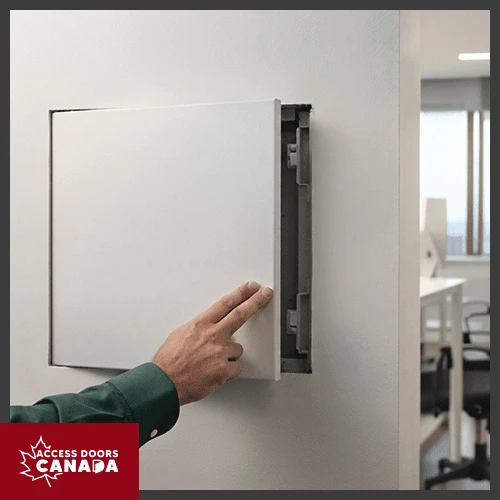
Concealed Touch Latch for Tool-Free Access
The ADC-BAC-TLDF features a concealed spring-and-pin touch latch that opens with a simple push, eliminating the need for visible locks, keys, or tools. Its removable panel provides unobstructed access to concealed building systems, helping maintenance personnel perform inspections and servicing more efficiently.
Beaded Flange for Seamless Installation
This solution incorporates a beaded drywall flange designed for non-rated gypsum drywall applications. It simplifies the mudding and finishing process while creating a smooth transition between the access panel and the surrounding drywall for a clean, professional appearance.
Removable Panel for Greater Accessibility
Featuring a removable 16-gauge cold-rolled steel panel secured by concealed spring hinges, the ADC-BAC-TLDF provides greater accessibility. The fully removable design provides unobstructed access in confined spaces where traditional hinged access doors may limit maintenance activities.
Durable Construction for Long-Term Performance
The ADC-BAC-TLDF is manufactured from cold-rolled steel that resists corrosion and rust for dependable long-term performance. Its durable construction helps withstand repeated maintenance access throughout the building's service life.
LEED v4 Contribution for Sustainable Projects
The ADC-BAC-TLDF contributes toward LEED v4 certification, making it suitable for projects pursuing sustainable building goals. It also features a high-quality white powder coat primer that can be painted or finished with wallpaper to blend seamlessly with surrounding interiors, supporting both sustainable construction and architectural consistency.
Choosing the ADC-BAC-TLDF Concealed Touch Latch Aesthetic Door is just the first step. Request a quote to receive project-specific pricing and learn more about our custom size options. We'll help ensure your order aligns with your opening dimensions and application requirements.
Frequently Asked Questions About Concealed Access Panels
1. How do concealed access panels support building maintenance?
Concealed access panels provide convenient entry to concealed building systems, allowing maintenance personnel to perform inspections, repairs, and upgrades without removing sections of finished walls or ceilings. This helps reduce maintenance time while minimizing disruption to the surrounding interior.
2. Can concealed access panels be installed in ceilings as well as walls?
Yes. Many concealed access panels are designed for both wall and ceiling applications, provided they are installed according to the manufacturer's instructions and are compatible with the surrounding construction.
3. What is the difference between a touch-latch and a lockable concealed access panel?
A touch-latch concealed access panel opens with gentle pressure and does not require visible locks or tools, making it ideal for areas where aesthetics are a priority. A lockable panel uses keyed or specialized locking hardware to provide additional security where controlled access is required.
4. When should a fire-rated concealed access panel be specified?
A fire-rated concealed access panel should be specified whenever the opening is located within a fire-rated wall or ceiling assembly. The panel should match the required fire-resistance rating of the surrounding assembly and comply with applicable building codes.
To Sum It Up
Every high-compliance commercial project has different access requirements, making the choice of concealed access panel just as important as the wall or ceiling assembly itself. Selecting a solution that aligns with the project's construction and maintenance needs and code requirements helps support efficient building operations while preserving the clean, seamless interiors expected in modern commercial spaces.
For non-rated drywall applications, the ADC-BAC-TLDF Concealed Touch Latch Aesthetic Door offers a practical combination of a flush, concealed appearance, convenient maintenance access, and durable steel construction.
Ready to finalize your commercial project specifications? Our team can help you select the right concealed access panel for your application. Contact us or call +1-888-327-5471 to discuss your project requirements.


